
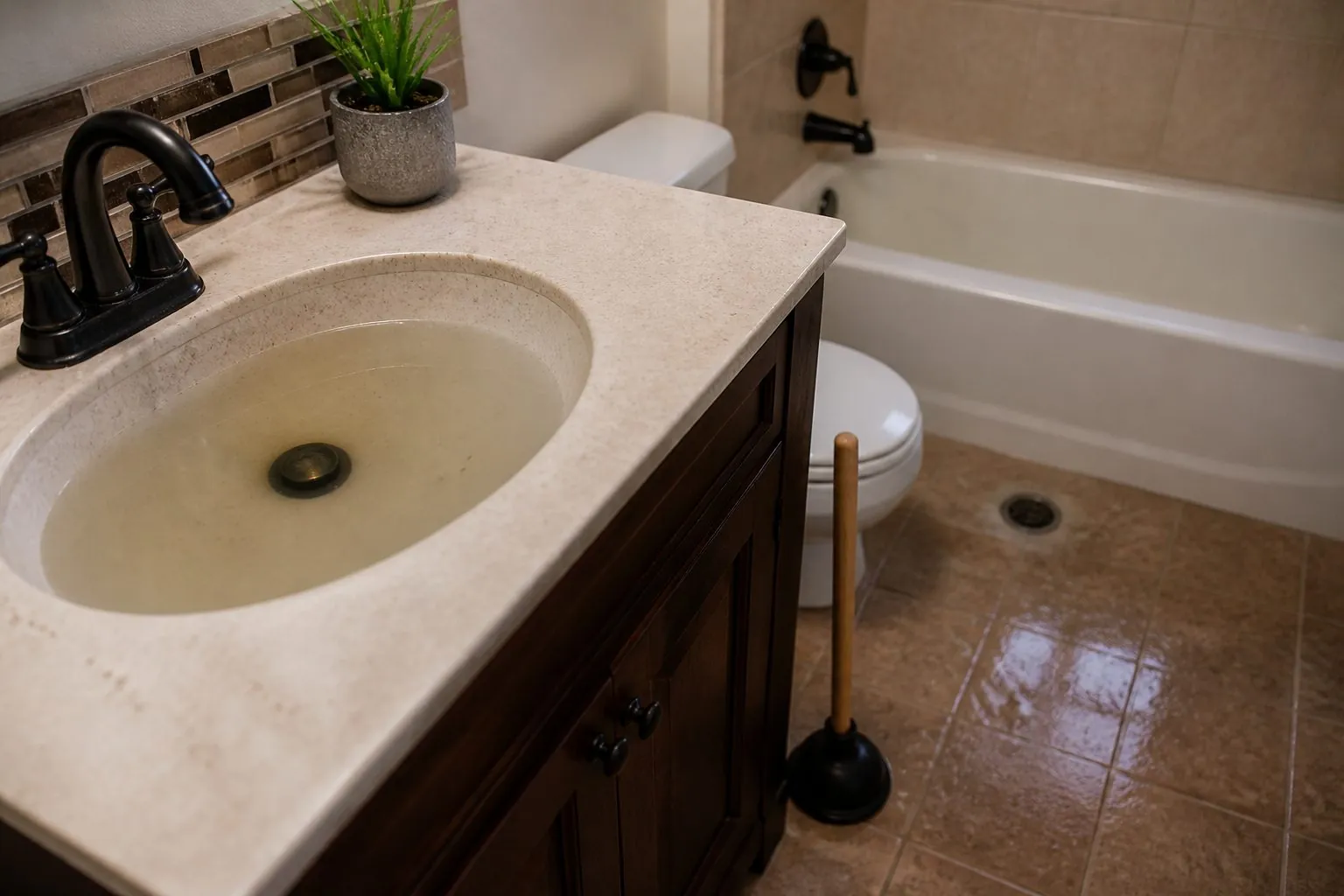
If several drains are backing up, gurgling, or draining slowly at about the same time, the problem may be farther down a shared drain or sewer line rather than inside each individual fixture. A blockage, root intrusion, accumulated debris, damaged pipe, or another restriction can affect several fixtures once their drain lines connect.
That does not mean every multi-fixture problem requires sewer replacement. Some problems only need to be cleared. Others may involve buildup or roots. Structural pipe damage is another possibility, but it needs to be identified before repair or replacement is considered.
The biggest clue is the pattern. One clogged sink often points to a local problem. Several fixtures reacting to each other deserves a closer look at the shared drainage system.
What Does It Mean When Several Drains Back Up at Once?
When multiple fixtures develop drainage problems together, the restriction may be located downstream from the point where their individual drain lines connect.
Your sinks, toilets, showers, tubs, and other plumbing fixtures do not each run independently all the way to the sewer. Their drain lines eventually connect into larger shared piping that carries wastewater away from the property.
If something restricts that shared path, symptoms can begin appearing at more than one fixture.
That can explain situations such as:
- A toilet gurgling when a shower drains
- Water rising in a bathtub after another fixture is used
- Several sinks draining slowly at the same time
- Multiple toilets becoming sluggish
- Backups appearing in different parts of the home
When the symptoms extend beyond one fixture, professional sewer clearing or a broader drain evaluation may be more appropriate than treating each fixture as a separate clog.
How Is One Clogged Drain Different From Multiple Backed-Up Drains?
The number and location of affected fixtures can provide useful clues.
Symptom pattern | What it may suggest |
|---|---|
One sink drains slowly | Local fixture or branch-drain restriction |
One toilet repeatedly clogs | Toilet or nearby branch issue |
Toilet and shower have problems together | A shared branch may be restricted |
Several fixtures around the home back up | A main building drain or sewer-line issue becomes more likely |
Water appears at a low fixture when another fixture drains | A downstream restriction may be preventing normal flow |
Several fixtures gurgle | Air and wastewater movement may be disrupted farther down the system |
These patterns help narrow the possibilities, but they are not a diagnosis by themselves.
One Fixture Is Affected
If only one bathroom sink drains slowly while everything else works normally, the problem is more likely to be close to that fixture.
Hair, soap residue, food waste, or other material can restrict individual drains.
JG provides professional drain cleaning when a local drain needs evaluation and clearing.
Two Nearby Fixtures Are Affected
When nearby fixtures begin having problems together, they may share part of the same branch drain.
For example, a bathroom sink, shower, and toilet may connect into shared drainage before joining the larger building drain.
A restriction in that shared section can make multiple fixtures in the same area behave strangely.
Fixtures Throughout the Home Are Affected
When bathrooms, kitchen fixtures, and other drains in different parts of the property develop symptoms at roughly the same time, the main building drain or sewer lateral becomes more important to investigate.
That does not prove where the blockage is. It does tell you the problem is less likely to be several unrelated fixture clogs happening simultaneously.
Why Does One Drain Back Up When I Use Another Fixture?
One fixture can react when another is used because both may connect to the same drainage piping farther downstream.
Normally, wastewater and air move through the plumbing system without much attention from the homeowner.
When a restriction reduces the available path, that flow changes.
You might notice:
- The toilet bubbling when the sink drains
- The shower gurgling when a toilet flushes
- Water rising in a tub when a washing machine drains
- A floor drain reacting when another fixture is used
The fixture showing the symptom is not necessarily where the blockage is located.
That is one reason repeatedly treating the visible fixture may not solve the actual problem.
What Can Cause Multiple Drains to Back Up?
Several different problems can restrict a shared drain or sewer line.
A Main Drain or Sewer-Line Blockage
A physical obstruction can reduce or stop wastewater flow through the shared line.
EPA sewer guidance identifies blockages as a major cause of sewer backups and overflows. Material inside the pipe can gradually reduce capacity or create a more sudden obstruction.
If the affected line needs to be cleared, JG’s sewer clearing service is the most directly relevant service.
Grease and Debris Buildup
Fats, oils, grease, and other material can contribute to sewer blockages.
EPA guidance specifically identifies fats, oils, and grease as materials that can build up and restrict sewer flow.
A small amount entering the plumbing once may not create an immediate backup. The concern is accumulation that gradually reduces the space available for wastewater to move.
Tree Roots Entering the Sewer Line
Tree roots can enter pipes through defects, openings, or joints and create restrictions.
Once roots are inside, they can also collect paper, grease, and other debris.
JG already has a separate resource explaining how tree roots can block a sewer line, so root intrusion does not need to dominate this article.
The important point here is that roots are one possible reason several connected drains may begin showing symptoms.
Damaged or Deteriorated Sewer Pipe
Sometimes the problem is not simply material inside the pipe.
A sewer line can develop structural problems that interfere with normal flow.
Depending on the situation, those may include:
- Cracks
- Displaced sections
- Partial collapse
- Other defects that restrict wastewater movement
If structural damage is confirmed, sewer line repair may be appropriate.
More extensive damage may require sewer line replacement, but a backup alone does not prove that replacement is necessary.
Wipes and Other Inappropriate Materials
Products that do not break down readily can contribute to sewer restrictions.
EPA specifically identifies wipes and other inappropriate materials sent into sewer systems as potential causes of blockages.
Even products marketed as flushable can contribute to problems in sewer systems.
Does Toilet Gurgling Mean the Main Sewer Line Is Clogged?
Toilet gurgling can be a warning sign of a downstream drainage problem, especially when other fixtures are also draining slowly or backing up, but gurgling alone does not confirm a main sewer clog.
Drainage systems depend on both wastewater flow and proper air movement.
When flow becomes restricted, air may move through nearby fixtures in unusual ways. That can create bubbling or gurgling sounds.
Pay more attention when gurgling occurs alongside:
- Multiple slow drains
- Water rising in another fixture
- Recurring backups
- Sewage odors
- Toilets changing water level unexpectedly
A single noise may have several explanations. A pattern across multiple fixtures is more meaningful.
Why Does Water Back Up Into the Shower or Bathtub?
A bathtub or shower can sometimes become the place where a drainage problem first becomes visible because those fixtures sit relatively low in the plumbing system.
If wastewater cannot continue downstream normally, it may move toward another available opening in the connected system.
That can create a confusing situation where:
- You flush a toilet
- The toilet itself appears to drain
- Water or wastewater shows up in the tub or shower
The tub is not necessarily clogged.
The backup may be occurring farther downstream after the two fixture drains connect.
Is a Multiple-Drain Backup a Plumbing Emergency?
A multiple-drain problem becomes more urgent when sewage or wastewater is actively entering the home or when using plumbing fixtures makes the backup worse.
EPA notes that sanitary sewer overflows and sewage backups can cause property damage and may expose people to bacteria, viruses, parasites, and other microorganisms.
More Urgent Situations
Prompt professional attention is especially important when:
- Sewage is coming into a tub, shower, floor drain, or other fixture
- Wastewater is overflowing
- Several fixtures are unusable
- Every additional use of water worsens the backup
- Contaminated water is reaching floors or living spaces
Avoid direct contact with sewage or wastewater.
Problems That May Be Less Immediate but Still Need Attention
You should also investigate situations such as:
- Several fixtures draining slowly
- Recurring toilet gurgling
- Backups that temporarily disappear and then return
- Multiple drains developing symptoms over time
A recurring problem usually deserves more than repeated temporary clearing at individual fixtures.
Should You Keep Using Water When Several Drains Are Backing Up?
If using water causes the backup to rise or move into other fixtures, reduce unnecessary water use until the drainage problem is evaluated.
Every gallon sent into a restricted drainage system still needs somewhere to go.
Continuing to run showers, washing machines, dishwashers, sinks, and toilets can add more wastewater behind the restriction.
This does not mean homeowners should attempt to dismantle or clear the main sewer line themselves.
The safer decision is to limit additional flow and determine where the restriction is located.
How Does a Plumber Find the Cause of Multiple Drain Backups?
The diagnostic process depends on the property and symptoms, but the first goal is to determine how much of the drainage system is affected.
A plumber may consider:
- Which fixtures have symptoms
- Whether affected fixtures are near each other or throughout the property
- Whether the backup occurs only when particular fixtures are used
- Whether an accessible plumbing cleanout is available
- Whether the drain or sewer line needs clearing
- Whether further inspection is needed to check for structural problems
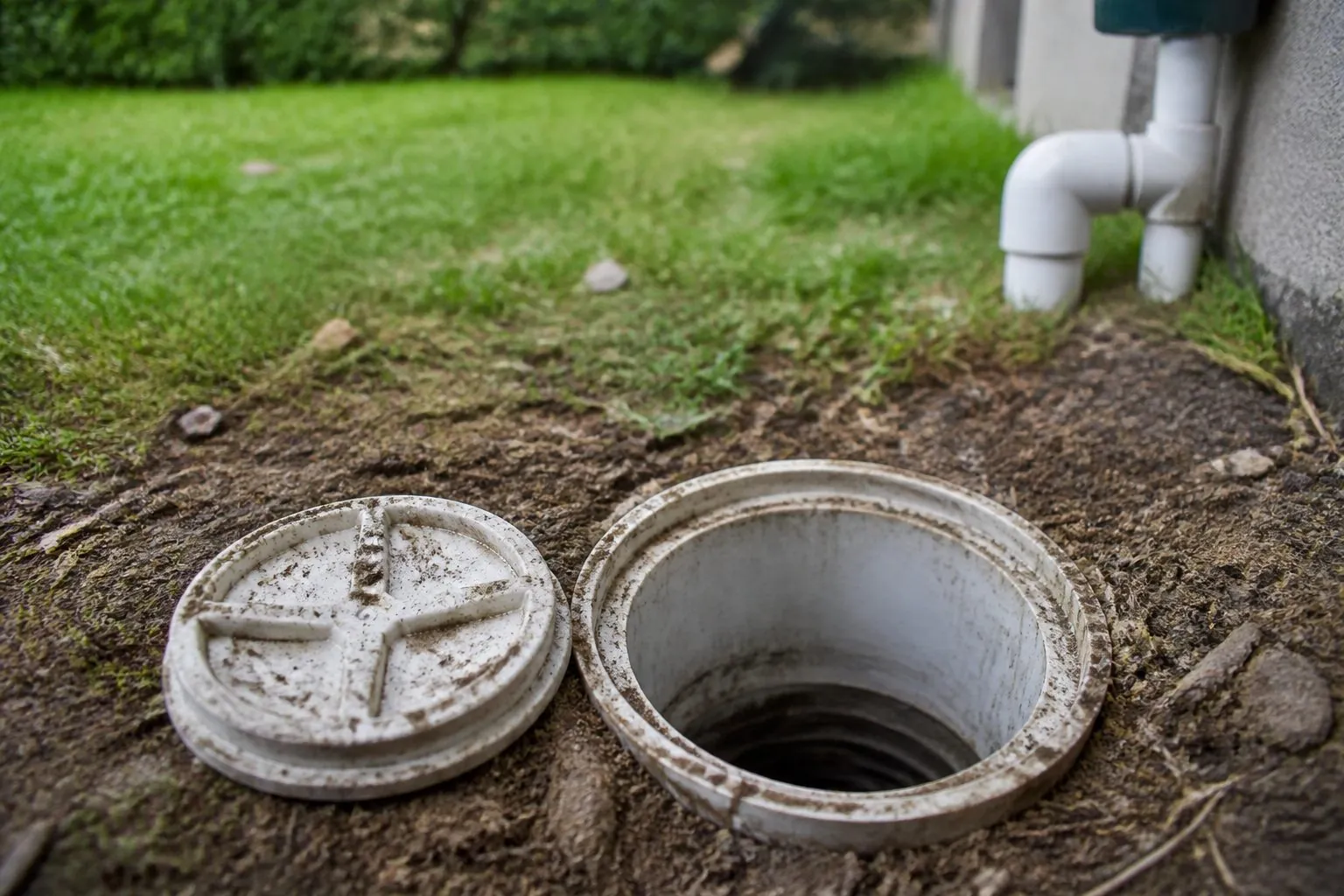
JG’s cleanout page confirms that the company installs cleanouts and uses them as access points for inspections, blockage clearing, and drain/sewer maintenance.
The same page also states that camera inspection technology can be used through cleanout access to assess the condition of the plumbing system.
Does a Main-Line Backup Mean the Sewer Pipe Needs Replacement?
No. A backup means wastewater is not moving through the drainage system normally. It does not tell you whether the pipe needs to be cleared, cleaned, repaired, or replaced.
Possible outcomes include:
- Clearing an obstruction
- Removing accumulated material
- Addressing root intrusion
- Cleaning the line when appropriate
- Repairing an isolated damaged section
- Replacing a sewer line when structural condition warrants it
Diagnosis matters because those solutions address very different problems.
JG maintains separate service pages for sewer clearing, sewer repair, and sewer replacement, which reflects that these are different levels of intervention, not interchangeable answers to every backup.
When Might Sewer Camera Inspection Be Helpful?
Camera inspection may be useful when the plumber needs more information about the condition of the line.
Examples can include:
- Backups that keep returning
- Suspected tree-root intrusion
- Concern about cracks or other structural damage
- A problem that returns after previous clearing
- A need to identify the location or type of sewer-line defect
JG’s cleanout service page specifically states that camera inspection can be used to assess plumbing through cleanout access.
A camera is a diagnostic tool, not a treatment by itself.
The results help determine whether the next step should involve clearing, cleaning, repair, or another solution.
Multiple Drains Backing Up in Glendora? Look Beyond the Individual Fixture
When several drains develop problems together, treating each fixture separately may miss the actual source.
One slow sink can be a localized clog. A toilet, shower, and other fixtures backing up or gurgling together can indicate that the restriction is farther down the shared drainage system.
The cause might be buildup, inappropriate material, roots, or pipe damage. The symptoms alone do not determine which one.
JG Plumbing & Rooter provides drain and sewer services for homes and businesses in Glendora, Covina, West Covina, Azusa, San Dimas, and surrounding San Gabriel Valley communities.
If several fixtures are backing up, call 626-771-5217 or schedule drain or sewer service to have the cause evaluated.
Frequently Asked Questions
Do multiple clogged drains mean the main sewer line is clogged?
They can indicate a restriction in a shared drain or sewer line, especially when fixtures in different parts of the home are affected. However, the symptoms alone do not confirm exactly where the blockage is located.
Why does my toilet gurgle when I run the shower?
The toilet and shower may connect to shared drainage piping. If flow or air movement is restricted farther downstream, air can move through nearby fixtures and create gurgling or bubbling sounds.
Why does water come up in my bathtub when I flush the toilet?
A downstream restriction may prevent wastewater from continuing through the drain normally. Because the tub is a relatively low fixture, the backup may become visible there even though the tub itself is not the source of the problem.
Should I stop using water if multiple drains are backing up?
If additional water use makes the backup worse, reduce unnecessary water use until the problem can be evaluated. Sending more wastewater into a restricted line can increase the amount backing up into connected fixtures.
Do recurring backups mean I need a new sewer line?
No. Recurring backups can result from several causes, including obstructions, buildup, roots, or structural pipe problems. Sewer replacement should be considered only when the condition of the line actually warrants it.
Can a sewer camera show why my drains keep backing up?
A camera inspection can help identify conditions such as blockages, root intrusion, cracks, and other sewer-line problems when inspection is appropriate. The results can help determine whether clearing, repair, or another service is needed.