

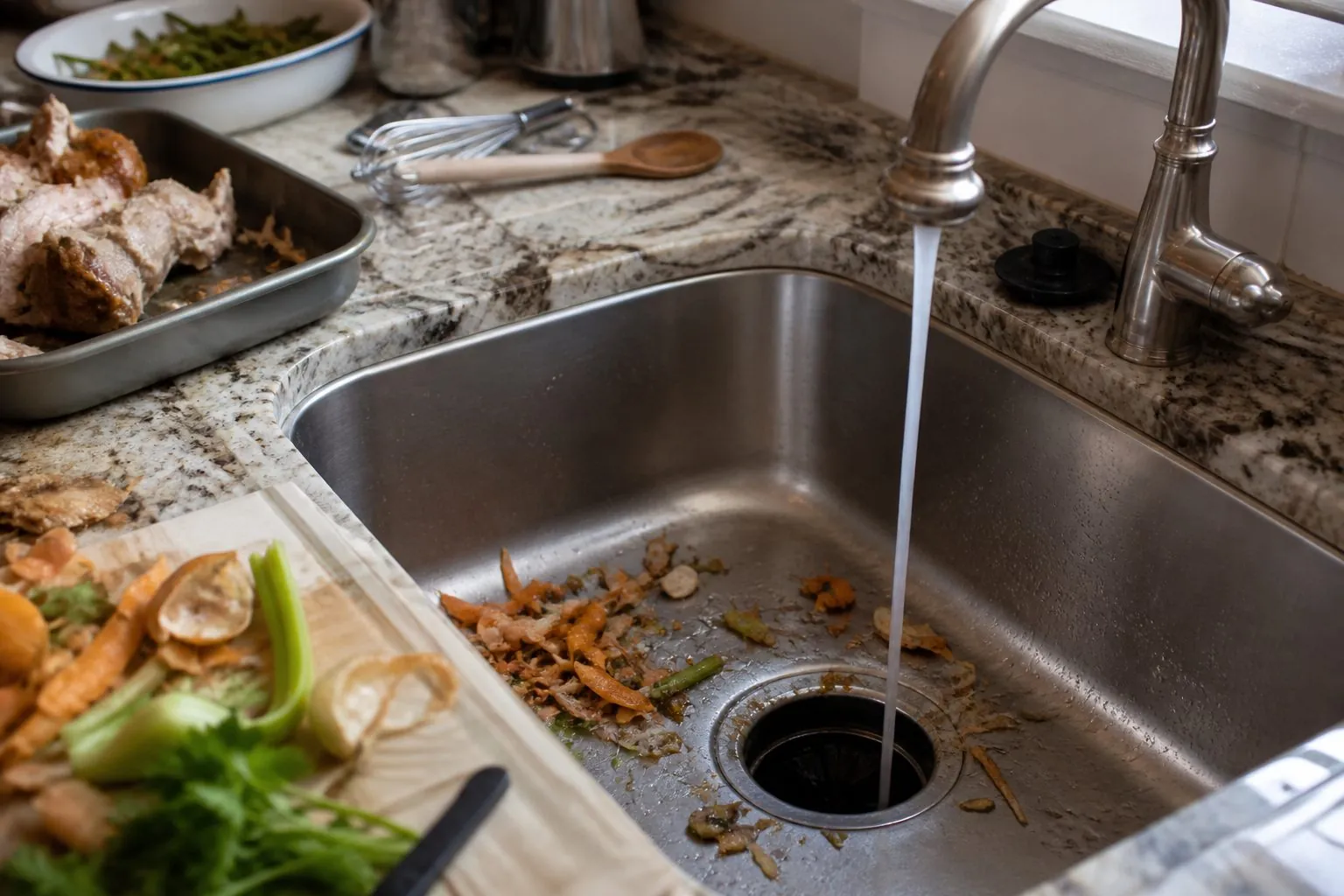
The most important Thanksgiving cooking waste to keep out of your kitchen drain and garbage disposal is fats, oils, and grease. Turkey drippings, cooking oil, butter, and other fatty liquids can enter the plumbing, coat pipe walls, and contribute to blockages over time.
A garbage disposal does not make grease safe for your plumbing. It grinds solid food waste into smaller pieces, but grease still travels into the drain.
Other Thanksgiving scraps require more nuance. Potato peels, rice, pasta, fibrous vegetables, and even bones may be acceptable for some garbage disposal models, but not others. Your disposal’s manufacturer instructions should determine what the unit can safely handle.
The best Thanksgiving plumbing strategy is simple: keep grease out, avoid overloading the disposal, scrape excess food into the trash or compost where appropriate, and pay attention if the kitchen sink begins draining more slowly.
What Thanksgiving Foods Cause the Most Plumbing Problems?
Holiday cooking produces far more kitchen waste than an ordinary meal. The bigger concern is not necessarily one spoonful of leftovers. It is repeatedly sending large amounts of grease and food waste into the plumbing during preparation and cleanup.
Turkey Grease and Pan Drippings
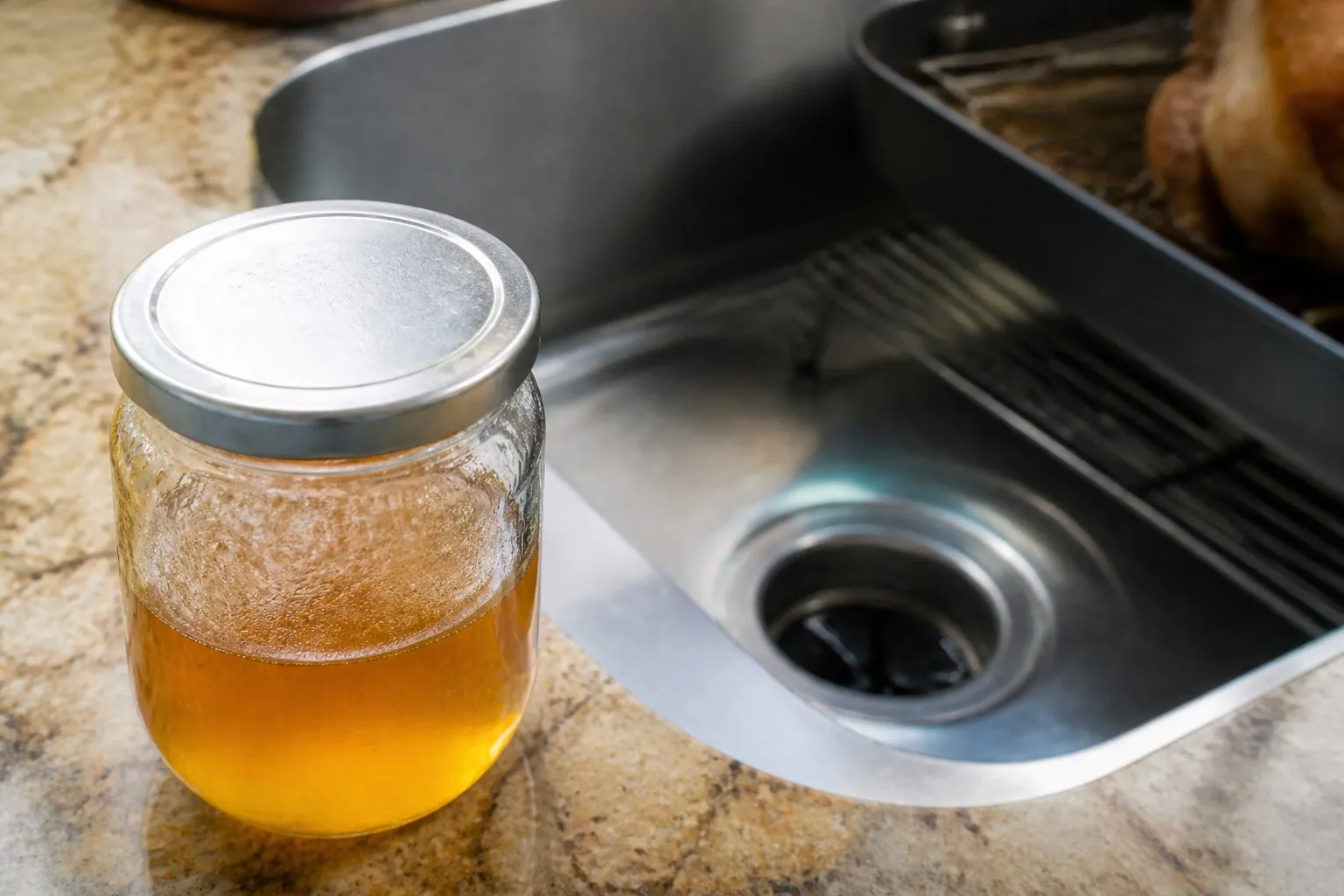
Turkey grease and fatty pan drippings should not go down the kitchen sink or garbage disposal.
The U.S. Environmental Protection Agency explains that grease entering household drains can stick to the inside of sewer pipes and build up over time.
Grease can come from:
- Meat fats
- Cooking oil
- Butter and margarine
- Shortening
- Sauces
- Dairy products
- Fatty food scraps
The EPA also specifically notes that household garbage disposals do not keep grease out of the plumbing system. They simply break solid material into smaller pieces.
Instead of rinsing turkey drippings into the sink, collect them separately and dispose of them according to your local household-waste guidance.
Cooking Oil, Butter, and Fat-Heavy Sauces
Cooking oil belongs in the same category as turkey grease.
Do not assume a liquid is safe for the drain simply because it is warm enough to pour.
Butter, gravy residue, oily sauces, and other fat-heavy leftovers can contribute to buildup when enough of the material enters the plumbing.
Scraping pans and dishes before washing them can reduce the amount that reaches your drain.
Large Amounts of Food Scraps
A garbage disposal is designed to process food scraps, but it should not be treated like a trash can.
Manufacturer guidance recommends feeding approved food waste into a disposal gradually rather than loading a large amount into the unit at once.
During Thanksgiving cleanup, that means avoiding the temptation to scrape an entire serving bowl, casserole dish, or pile of leftovers into the sink.
Large food loads can make it harder for both the disposal and connected drain to move material effectively.
Can You Pour Turkey Grease Down the Drain With Hot Water?
No. Hot water does not make turkey grease safe for your plumbing.
Warm grease may remain liquid long enough to disappear from the sink, but that does not mean it has safely passed through the entire plumbing and sewer system.
The EPA warns that grease can adhere to pipe walls and accumulate until flow becomes restricted.
The better approach is to keep grease out of the plumbing system entirely.
If possible:
- Let grease cool
- Collect it in an appropriate container
- Scrape greasy food residue into the trash or appropriate waste container
- Use a sink strainer to catch additional solids
Do not rely on extra-hot water as a way to wash grease away.
Does a Garbage Disposal Make Grease Safe for Your Pipes?
No. A garbage disposal does not remove grease from wastewater.
This misconception is especially important around Thanksgiving.
The disposal can grind solid food scraps, but grease, oil, and fat still enter the drain.
EPA guidance states that garbage disposals do not keep grease out of the plumbing system.
Current InSinkErator guidance also consistently says never put fats, oils, or grease into the disposal, regardless of which disposal series is being used.
That makes grease the clearest universal Thanksgiving “keep out” category.
Can Potato Peels Go in the Garbage Disposal?
It depends on the garbage disposal and the amount being processed.
Generic plumbing advice often says that potato peels should never enter any garbage disposal. Current manufacturer guidance is more nuanced.
For example, InSinkErator lists potato peels as acceptable for several current disposal series when the unit is operated properly. It also recommends avoiding excessive amounts of peels at once.
For Thanksgiving cleanup:
- Check the instructions for your specific disposal
- Avoid dumping a large pile of peels into the unit
- Do not assume every model handles the same foods
- Scrape excess material into another waste container when uncertain
The same principle applies to many other holiday scraps.
What About Rice, Pasta, and Other Starchy Foods?
Rice and pasta are another area where blanket rules can be misleading.
Some disposal manufacturers permit them in appropriate quantities. The bigger concern is overloading the disposal and sending large volumes of food waste into the connected drain at once.
If you are cleaning out a large pot or serving bowl, scrape the bulk of the leftovers away before rinsing the dish.
The disposal should handle manageable food scraps, not become the primary destination for Thanksgiving leftovers.
Can Celery, Onion Skins, and Other Fibrous Foods Go in a Disposal?
Again, the answer depends partly on the unit.
Some higher-performance disposal models are designed to handle tougher and more fibrous food scraps, including celery and similar materials. Other models may have more limited grinding capabilities.
That means a universal rule such as “celery will always destroy your disposal” is too broad.
The safer advice is:
- Check your manufacturer's food-waste guidance
- Avoid feeding large quantities of fibrous material at once
- Do not overload the unit
- Use another disposal method if you are unsure what your model can handle
Can Bones Go in a Garbage Disposal?
Some garbage disposals are designed to grind certain bones, but others are not.
Current manufacturer guidance illustrates why model-specific advice matters. InSinkErator’s advanced series lists cooked chicken and beef bones among foods those particular units can process, while other series have more limited recommendations.
Therefore, do not assume:
“Bones always go in the disposal.”
But also do not assume:
“No garbage disposal can handle bones.”
Consult the instructions for the unit installed in your kitchen.
What Should Never Go in a Garbage Disposal?
Although food-handling capabilities differ among models, several rules are much more consistent.
Fats, Oils, and Grease
Keep them out of both the disposal and drain.
This includes turkey grease, cooking oils, and significant amounts of melted fat.
Non-Food Items
A garbage disposal is designed for food waste, not:
- Plastic
- Metal
- Utensils
- Glass
- Packaging
- Foil
- Paper products
- Other non-food objects
Too Much Food at Once
Even approved food scraps should generally be processed gradually.
Current manufacturer guidance recommends running the disposal and cold water first, then gradually feeding appropriate food waste rather than pre-loading the chamber.
Anything Your Manufacturer Prohibits
Your disposal’s manual takes priority over generic online lists.
Different units have different grinding systems and capabilities.
What Is the Best Way to Handle Thanksgiving Kitchen Waste?
A little preparation during cleanup can reduce how much food and grease enters your plumbing.
Useful habits include:
- Scrape plates before rinsing them
- Keep turkey grease and cooking oil out of the sink
- Use a sink strainer to catch food scraps
- Put appropriate scraps in trash or compost
- Avoid dumping large amounts of leftovers into the disposal
- Follow the disposal manufacturer's instructions
- Feed permitted scraps gradually rather than all at once
EPA guidance specifically recommends scraping grease and food scraps from cookware, dishes, and utensils and using drain strainers to catch solids before they enter the plumbing.
What Are Signs Thanksgiving Cleanup Is Starting to Clog the Kitchen Drain?
A slower drain is often the earliest sign that water and waste are no longer moving normally through the kitchen plumbing.
Watch for:
- Water taking longer to leave the sink
- Water temporarily pooling around the drain
- Gurgling after water drains
- The disposal struggling during normal operation
- Water backing up when the disposal runs
- A clog that appears to clear but quickly returns
- Water backing up from the second bowl of a double sink
Do not keep forcing more food and water into a drain that is already struggling.
If the disposal seems to work normally but the sink stays slow or backed up, the problem may be in the connected drain rather than the disposal itself.
JG Plumbing & Rooter provides professional drain cleaning for kitchen and other drain problems in its established service area.
What Should You Do If the Garbage Disposal Stops Working?
Stop adding food if the disposal hums, stops grinding normally, begins leaking, or otherwise appears to malfunction.
Do not reach inside the disposal with your hand.
Manufacturer troubleshooting guidance emphasizes shutting off power before inspecting the grinding chamber and using appropriate tools rather than placing a hand inside the unit.
If the problem is not obvious or safely resolved, JG offers garbage disposal repair and service for issues such as jams, malfunctions, leaks, and unusual operation.
A recurring problem may also raise the question of whether a garbage disposal should be repaired or replaced once that supporting article is published.
When Does a Thanksgiving Kitchen Clog Need Professional Drain Cleaning?
Consider having the kitchen drain evaluated when:
- Standing water remains in the sink
- Drainage continues getting slower
- The clog repeatedly returns
- The disposal operates but water still will not drain properly
- Gurgling or backup continues
- Water use causes the sink to fill again
If problems begin appearing in multiple fixtures outside the kitchen, the restriction may be farther down a shared drainage line rather than limited to the kitchen.
JG’s related article about why multiple drains may back up at the same time explains that broader symptom pattern once that article is published.
Keep Thanksgiving Dinner Out of the Plumbing
The easiest Thanksgiving plumbing problem to avoid is the one you never send down the drain.
Keep fats, oils, and grease out of the kitchen plumbing. Scrape excess food from cookware and plates. Avoid overwhelming the garbage disposal with large amounts of waste, and follow the manufacturer’s instructions for your specific model.
If the kitchen sink starts draining slowly, the disposal stops working normally, or water begins backing up after holiday cleanup, the problem may need more than another rinse of the sink.
JG Plumbing & Rooter provides garbage disposal and drain services for homes and businesses in Glendora and surrounding San Gabriel Valley communities.
Call 626-771-5217 or schedule plumbing service to have the problem evaluated.
Frequently Asked Questions
Can turkey grease go down the garbage disposal?
No. Garbage disposal manufacturers and EPA guidance recommend keeping fats, oils, and grease out of the disposal and drain. A disposal grinds solids but does not remove grease from the wastewater entering the plumbing.
Does hot water keep grease from clogging a drain?
Hot water may keep grease liquid temporarily, but it does not make grease safe for the plumbing system. EPA guidance recommends keeping grease out of drains because it can adhere to pipes and contribute to blockages.
Can potato peels go in a garbage disposal?
Some garbage disposal models are designed to handle potato peels. The safest approach is to follow the instructions for your specific unit and avoid feeding excessive amounts into the disposal at once.
Can coffee grounds go in a garbage disposal?
Some manufacturers allow coffee grounds in moderation, but disposal recommendations vary. InSinkErator currently permits them while advising users to use plenty of cold water and avoid excessive amounts.
Can bones go in a garbage disposal?
Some higher-performance disposal models can process certain bones, while other units may not be designed for them. Check the manufacturer’s guidance for your specific garbage disposal before putting dense scraps into it.
Why is my kitchen sink slow after Thanksgiving dinner?
Heavy food waste, grease, or other material may have restricted the kitchen drain. If the disposal operates normally but the sink remains slow or backs up repeatedly, professional drain cleaning may be appropriate.